

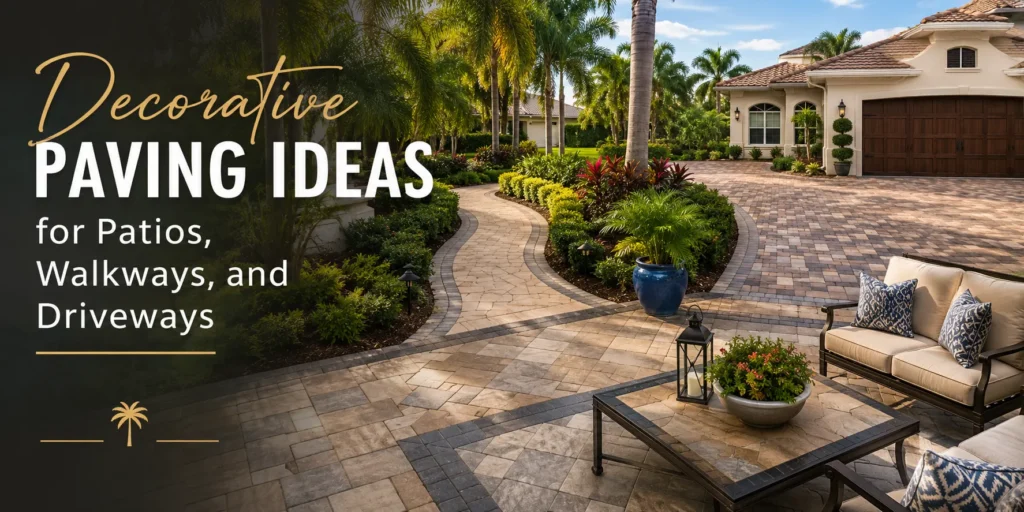
If you want to add more style and function to your outdoor space, decorative paving is a great place to start. The right paver design can make a patio feel more inviting, give a walkway more character, and turn a plain driveway into a strong part of your home’s curb appeal.
Pavers also give you plenty of choices. You can select colors, shapes, textures, borders, and laying patterns that match your home. Panda Pavers’ decorative paving services can help you create an outdoor space that looks polished and works well for daily life.
Why Decorative Paving Works for Florida Homes
Florida homeowners spend a lot of time outdoors. Patios become places for family meals, walkways guide guests around the property, and driveways make one of the first impressions from the street.
Decorative paving works well for these areas because it brings style and purpose together. Instead of settling for one plain surface, you can build a design that fits your home and the way you use the space.
Homeowners often choose decorative paving because:
- It offers more colors and patterns than plain concrete
- It can connect different outdoor areas
- It adds a more custom look to the property
- Individual pavers can often be replaced when needed
- It can improve curb appeal without making the design feel too busy
The National Association of Realtors’ outdoor remodeling research also shows why outdoor appearance matters. Exterior projects can improve how homeowners feel about their property while making the home more attractive to future buyers.
Decorative Pavers for Patios That Feel More Inviting
Patios are one of the best places to get creative with decorative pavers. You can use different layouts to create dining areas, conversation spaces, outdoor kitchens, or quiet corners for relaxing.
A good patio design should look attractive, but it also needs to fit your furniture and daily plans. Before choosing materials, think about how many people usually use the patio and what activities happen there.
Use a border to frame the patio
A border is a simple way to give your patio a finished look. You can use a darker paver around the edge or turn the same paver in a different direction.
Borders can also help separate the patio from nearby grass, planting beds, or pool areas. This creates a clear shape without adding too many colors.
Create separate activity zones
Larger patios can feel more useful when they are divided into zones. For example, you might create:
- A dining area near the house
- A seating area farther from the door
- A cooking area with room to move
- A small accent space around a fire feature
You do not need walls to separate these areas. A change in paver pattern or a narrow border can make each zone feel distinct.
Panda Pavers offers patio paving services for homeowners who want a well-planned space that fits their home, yard, and outdoor lifestyle.
Consider the size of the pavers
Larger pavers often create a clean and modern appearance. Smaller pavers usually add more detail and can work well with traditional or Mediterranean-style homes.
The size of your patio matters too. Large pavers may make a smaller space feel open, while a detailed pattern can add interest to a wide patio.
Choose Paver Patterns That Match the Space
The laying pattern can change the entire look of a paved area. A simple pattern may feel calm and classic, while a more detailed layout can become a major design feature.
Before selecting a layout, review some common paver patterns and think about how each one would look across the full surface.
Popular choices include:
- Running bond for a clean, simple layout
- Basket weave for a more traditional appearance
- Herringbone for a strong sense of movement
- Random layouts for a relaxed, natural look
- Circular patterns for patios and entry accents
Keep in mind that some patterns look better in large areas, while others work well as smaller accents. A professional installer can help you choose a layout that fits the size and shape of the project.
Walkway Ideas That Welcome Guests
Walkways help people move safely and comfortably through your property. They also connect the driveway, front entry, patio, pool area, and garden.
A plain walkway can feel like an afterthought. Decorative paving gives you a chance to make the path feel like a planned part of the landscape.
Straight or curved?
Straight paths feel clean, direct, and formal. They often work well for front entrances or homes with balanced landscaping.
Curved walkways feel softer and more relaxed. They can guide people through planting beds or around trees and other yard features.
Neither style is always better. The right shape depends on your home, available space, and how people naturally move through the property.
Add visual interest with small details
You do not need a complicated pattern to create an attractive walkway. Simple details can make a big difference.
Consider:
- A darker border along both sides
- A wider entrance near the front door
- A small pattern change at an intersection
- Low landscape lighting beside the path
- A gentle curve through a garden bed
For more planning ideas, take a look at these paver walkway ideas before deciding on the final width, shape, and style.
Keep comfort in mind
A walkway should feel easy to use. Make sure it is wide enough for the people who will use it most often. Wider paths can also make daily movement easier for older adults, guests, and anyone carrying bags or outdoor items.
Texture is another factor. A surface with good traction can feel more comfortable during Florida’s rainy months.
Decorative Paving Ideas for Driveways
Your driveway may cover a large part of the front yard, which means its design has a major effect on curb appeal. Decorative paving can make the driveway look more finished without turning it into a busy mix of colors and patterns.
The best driveway designs often use one main paver with a controlled accent.
Add a contrasting border
A darker border can outline the driveway and create a clean edge. It may also help connect the driveway to nearby walkways or entry areas.
You can use the same border color elsewhere on the property to create a consistent look.
Use an entrance band
A band near the street or garage can add interest without covering the entire driveway in a detailed pattern. This works well for homeowners who want a custom touch but prefer a simple overall layout.
Match the house
Look at the roof, exterior paint, stonework, trim, and garage door before choosing paver colors. The driveway should feel like part of the home rather than a separate feature.
Neutral blends often work well because they can support the home’s colors without competing with them.
How to Choose Decorative Pavers and Colors
Choosing from dozens of samples can feel overwhelming. Start by narrowing the options based on your home’s existing colors.
Warm beige, cream, and brown pavers often pair well with stucco, stone, and Mediterranean-style homes. Gray and charcoal tones can work nicely with white, blue, or more modern exteriors.
It also helps to view samples outdoors. Sunlight can make colors look different than they do inside a showroom.
For a deeper look at this decision, read Panda Pavers’ guide on how to choose paver colors and textures.
Limit the number of colors
Too many colors can make a space feel crowded. In many cases, one main blend and one accent color are enough.
You can create variety through pattern and texture instead of adding several strong colors.
Think about the whole property
A patio, walkway, and driveway do not have to use the same paver. However, they should share something in common.
You might repeat:
- The same border color
- A similar texture
- Related neutral tones
- One pattern in smaller accent areas
- The same paver family in different sizes
This creates a connected look while still letting each area have its own purpose.
The National Association of Home Builders’ design trends research also reflects the continued interest in useful outdoor spaces that feel connected to the home.
Decorative Paving Ideas by Project Area
| Project Area | Main Design Goal | Good Decorative Choice | Key Planning Detail |
| Patio | Comfort and entertaining | Borders, zones, mixed sizes | Plan around furniture and foot traffic |
| Walkway | Guidance and curb appeal | Curves, framed edges, subtle texture | Consider width and traction |
| Driveway | Structure and first impressions | Clean pattern with a darker border | Choose a layout suited for vehicle use |
| Entry | Welcoming appearance | Accent band or circular detail | Connect the entry to the home’s colors |
| This type of planning helps you focus on the purpose of each space before you make final design choices. |
Planning Decorative Paving for Florida Weather
Florida weather brings heat, strong sun, heavy rain, and humidity. A paving design must account for more than appearance.
Proper preparation under the pavers plays a major role in how the area performs. Drainage, base materials, edge restraints, and joint sand all support the finished surface.
Plan for water movement
Rainwater should move away from the home and avoid collecting in low areas. The slope and layout should fit the natural conditions of the property.
Some homeowners may also consider permeable pavement, which allows water to pass through parts of the surface. The Environmental Protection Agency explains how these systems may help manage runoff when they are planned and installed correctly.
Not every property needs a permeable system. A contractor should look at the site, drainage needs, and intended use before recommending a solution.
Common Decorative Paving Mistakes to Avoid
Adding too many patterns
A detailed border, bold center pattern, and several color changes can compete for attention. Choose one main feature and keep the rest of the layout quieter.
Forgetting furniture placement
A patio pattern may look great on paper but feel awkward once tables and chairs are added. Plan the layout around how the space will be furnished.
Choosing color from a small sample
Small samples do not always show how a color blend will look across a wide area. Ask to view larger displays or completed projects when possible.
Ignoring drainage
Water problems can affect the comfort and long-term condition of the paved area. Drainage should be part of the plan from the start.
Picking style over daily use
A walkway needs good traction. A driveway needs to support vehicle traffic. A patio needs enough room for furniture and movement. The design should work well after the project is finished.
Frequently Asked Questions About Decorative Paving
What is decorative paving?
Decorative paving uses colors, textures, shapes, patterns, and borders to create a more attractive outdoor surface. It can be used for patios, driveways, walkways, pool areas, and entry paths. The goal is to create a design that fits the property while still supporting daily use.
Are decorative pavers good for patios?
Yes. Decorative pavers work well for patios because they offer many layout options. Homeowners can use borders, pattern changes, and different paver sizes to create areas for dining, seating, or cooking. The final design should fit the size of the yard and the way the patio will be used.
Can decorative paving be used for driveways?
Yes, decorative paving can add structure and curb appeal to a driveway. A simple field pattern with a contrasting border is a popular choice. The pavers and installation method should be selected for regular vehicle traffic.
How do I choose the right paver color?
Start with the permanent colors on your home, including the roof, walls, trim, and stonework. Choose pavers that support those colors rather than compete with them. Viewing samples outside can also help because natural light may change how the color looks.
Does decorative paving need a lot of maintenance?
Maintenance depends on the material, traffic, weather, and installation. Routine cleaning, joint sand care, and occasional inspections can help the surface stay in good condition. Some homeowners also choose sealing based on the type of paver and the look they prefer.
Can I use different decorative pavers across my property?
Yes. The areas do not need to match exactly, but they should feel connected. Repeating a border color, texture, or color family can bring the patio, driveway, and walkways together without making every surface look the same.
Create a Lasting Look With Decorative Paving
Decorative paving can add style to your patio, walkway, or driveway, while also enhancing the overall appearance of your property. The best designs strike a balance between color, pattern, comfort, drainage, and daily use.
A skilled team can guide you through the choices, prepare the site correctly, and keep the project organized from start to finish. Contact Panda Pavers to discuss decorative paving ideas that fit your Florida home, lifestyle, and long-term plans.