

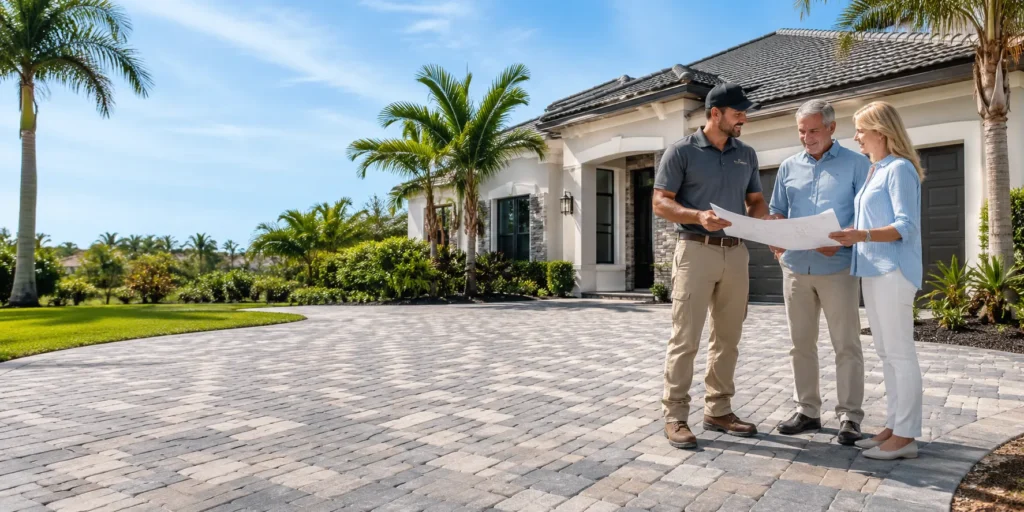
Choosing the right paver contractor in Florida is a big decision. A new driveway, patio, walkway, or pool deck can improve curb appeal, make your property easier to use, and support long-term value. Still, the final result depends on more than the pavers you select. It also depends on the team handling the work.
A dependable contractor should explain the process, answer your questions, respect your property, and keep you updated. Florida adds another layer to the decision because heat, heavy rain, drainage, and soil conditions can affect how pavers perform over time. Taking a little extra time before you sign can help you avoid stress, surprise costs, and repairs later.
Why Choosing the Right Paver Contractor Matters
Many companies sound similar during the first call. They may all promise good materials, fast service, and fair pricing. The real differences often show up when you ask what is included and how the work will be managed.
A reliable paver contractor should make the project feel organized from day one. You should know what materials will be used, how the site will be prepared, how long the work may take, and who will answer your questions.
Poor planning can lead to problems such as:
- Pavers that sink because the base was not prepared well
- Standing water caused by weak drainage planning
- Loose borders that allow the surface to shift
- Uneven cuts around curves, steps, or corners
- Delays with little communication
- Added charges that were not listed in the proposal
A paver project should improve your home, not leave you with a new list of worries. Homeowners planning several outdoor upgrades can start by learning more about professional hardscaping services and how different parts of the property can work together.
Start with Licensing, Insurance, and Local Experience
It is easy to get excited about colors, patterns, and design ideas. Before you get too far into those choices, take a close look at the company itself.
Ask every contractor about licensing, insurance, and local work history. The exact license requirements may depend on the location and scope of the job. Florida homeowners can use the official DBPR license search to look up businesses and licensed professionals.
Property owners in Palm Beach County can also review the county’s contractor regulations and verification resources.
A professional company should be ready to provide:
- Its business name, phone number, and physical or mailing address
- Proof of general liability insurance
- Workers’ compensation coverage or valid exemption records
- License details when the job calls for them
- A written estimate
- Local references or recent project examples
Local experience matters in Florida. A contractor who regularly works in the area is more likely to understand sandy soil, heavy rainfall, neighborhood rules, and common permit questions.
What a Good Paver Installation Company Should Explain
A trustworthy paver installation company should explain the job in clear, everyday language. You should not need a construction background to understand what will happen on your property.
The company should walk you through:
- Removal of old concrete, pavers, grass, or damaged materials
- Excavation and grading
- Base material and compaction
- Slope and drainage planning
- Edge restraint installation
- Paver placement and cutting
- Joint sand
- Cleanup and the final walkthrough
The surface gets most of the attention, but the layers under the pavers play a major role in long-term performance. A weak or uneven base can cause low spots, movement, and water problems.
Panda Pavers’ guide to paver installation inspection explains details homeowners can review during and after the job. It can also help you ask better questions while comparing proposals.
Florida’s ground conditions can affect how the area should be prepared. Reading about Florida soil and paver installation can help you understand why local knowledge and proper base work matter.
Compare Estimates Carefully
Price is part of the decision, but it should not be the only factor. The lowest bid may leave out important materials or steps. A higher estimate may include better preparation, clearer communication, stronger materials, or longer warranty coverage.
Review every proposal line by line. Make sure you are comparing the same type and amount of work.
| What to Compare | What the Proposal Should Explain |
| Scope of work | Removal, excavation, base prep, installation, edging, sand, and cleanup |
| Materials | Paver style, thickness, finish, color, and brand when available |
| Base preparation | Base material, depth, grading, and compaction |
| Drainage | Planned slope and where water will go |
| Timeline | Expected start window and estimated project length |
| Warranty | What is covered, how long coverage lasts, and any limits |
| Payment terms | Deposit, progress payments, and final payment |
| Change orders | How added work or unexpected costs will be approved |
| A clear estimate protects both you and the contractor. It gives everyone the same written plan and reduces the chance of misunderstandings. | |
| Something unclear? Ask about it before signing. A dependable paver contractor should be comfortable explaining the proposal without making you feel rushed. |
Look at Finished Projects, Not Just Reviews
Online reviews can give you useful background, but they should not be your only source of information. Ask to see recent work that is similar to your project.
Look for:
- Before-and-after photos
- Close-up images of cuts, borders, and transitions
- Projects completed several months or years ago
- Examples from nearby communities
- Work that matches your preferred style
- Photos showing drainage areas
A project may look good from across the street, but close-up photos can tell you more. Check the spacing between pavers, the straightness of borders, and the quality of cuts near walls or steps.
Homeowners replacing an older entrance can review Panda Pavers’ driveway paving services to learn about design and installation options for Florida properties.
You can also review education and training resources from the Concrete Masonry and Hardscapes Association. Industry education does not replace your own research, but it can help you understand common installation practices.
Ask About Communication and Project Management
Good workmanship matters, but communication shapes how the project feels from start to finish. You should know who will manage the work and how updates will be shared.
Ask these questions before signing:
- Who will be my main contact?
- Who will be on-site each day?
- How will you share updates or delays?
- What time will the crew normally arrive?
- Where will materials and equipment be stored?
- How will nearby plants and irrigation be protected?
- What happens if weather slows the work?
- Who should I call if I have a concern?
Clear answers show that the company has a plan. Vague answers may mean communication will become harder once the job starts.
For many homeowners, a low-stress experience matters as much as the finished look. A good contractor should respect your schedule, keep the work area orderly, and explain what to expect each day.
Watch for Red Flags
Some warning signs are easy to notice. Others may seem small at first but become bigger problems later.
Be cautious when a contractor:
- Pushes you to sign right away
- Requests a very large payment before giving written details
- Provides only a verbal estimate
- Avoids questions about insurance or licensing
- Cannot explain the installation process
- Changes the price without a written reason
- Has no recent work to show
- Uses a business name that does not match the contract
- Promises a very fast completion date before reviewing the site
- Leaves cleanup or disposal out of the estimate
Trust your judgment. A professional contractor should make you feel informed and comfortable, not pressured or confused.
Choose a Paver Installation Company That Understands Your Goals
The best paver installation company will take time to understand what you want from the project. Not every homeowner has the same needs.
You may want a driveway that adds curb appeal and creates a polished entrance. Maybe you want a patio for family gatherings or a walkway that feels safer and easier to use. A pool deck project may focus on appearance, comfort, and traction.
The contractor should ask how you use the space, what style you like, and how much maintenance you are willing to handle. They should explain your choices without pushing you toward the most expensive option.
A thoughtful team will also consider how the new pavers fit with your home, plants, and other outdoor areas. The finished space should look natural, work well, and support your plans for the property.
Think About Long-Term Value
A paver project is often a major investment, so it makes sense to think beyond the first few months. Ask how the surface may hold up over time and what care it may need.
Topics to discuss include:
- Joint sand replacement
- Cleaning recommendations
- Sealing options
- Repair methods
- Warranty coverage
- Color changes from sun exposure
- Replacement of single damaged pavers
- Ongoing maintenance
Many homeowners also wonder how a new outdoor surface may affect resale appeal. Panda Pavers’ article on whether pavers increase home value explains how curb appeal, function, and appearance may support the property’s overall presentation.
Long-term value does not always come from choosing the lowest price. It often comes from good planning, quality materials, careful installation, and helpful follow-up service.
Frequently Asked Questions About Choosing a Paver Contractor
How do I choose the best paver contractor in Florida?
Compare local experience, insurance, licensing when required, communication, written proposals, and past work. The best paver contractor should answer questions clearly and explain how the project will be managed from start to finish.
What should a paver installation company include in an estimate?
The estimate should explain removal, excavation, base preparation, paver materials, drainage, edge restraints, joint sand, cleanup, payment terms, and warranty details. A detailed estimate makes it easier to compare one paver installation company with another.
Should I choose the lowest paver contractor estimate?
Not automatically. A lower estimate may leave out preparation, materials, cleanup, or other important steps. Compare the full scope of work and focus on long-term value instead of the total price alone.
Why is drainage important for paver projects in Florida?
Heavy rain can create standing water, erosion, and movement when drainage is not planned well. The contractor should explain the slope of the surface and where runoff will go.
How much money should I pay before work begins?
Payment schedules vary by project. Ask for written terms that explain the deposit, any progress payments, and the amount due after completion. Avoid paying a large amount without a detailed contract.
What questions should I ask a paver installation company?
Ask about local experience, insurance, base preparation, drainage, materials, communication, permits, warranties, maintenance, and cleanup. The answers should be clear and specific to your property.
Ready to Hire the Right Paver Contractor?
Choosing the right paver contractor takes a little research, but that time can help you feel more confident about your investment. Look for a company that communicates clearly, explains the work, prepares the site correctly, and respects your home.
The best contractor will not rush the decision. They will help you understand your choices and create a plan that fits your space, style, and long-term goals.
When you are ready to discuss a driveway, patio, walkway, pool deck, or another outdoor project, contact Panda Pavers to schedule a consultation and learn more about your options.